
KTM RC GP
The GP treatment for KTM’s RC family: sharper ergonomics, livery and setup aimed at riders who want near-track performance in road-legal packages.
Jump to Full SpecificationsGP Treatment — What changes and why it matters
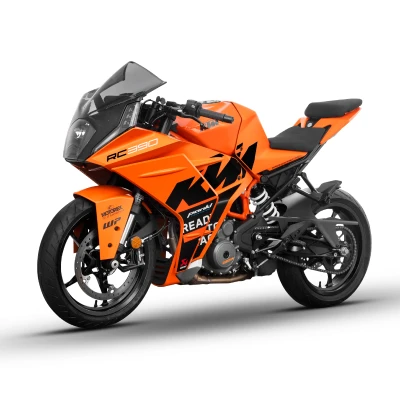
The RC GP variants (RC 200 GP and RC 390 GP) carry the same design intent: a sharper, racier riding triangle, focused suspension settings and GP-specific bodywork and livery to improve aerodynamics and rider feedback at speed. Both variants keep the RC family’s core chassis but tune ergonomics and components to prioritise quick direction changes, responsive braking and confident corner entries.
For riders, the GP edition reduces the gap between road and track behaviour — small changes in clip-on angle, suspension setup and tyres translate to measurable differences in lap times and rider confidence on fast sections.
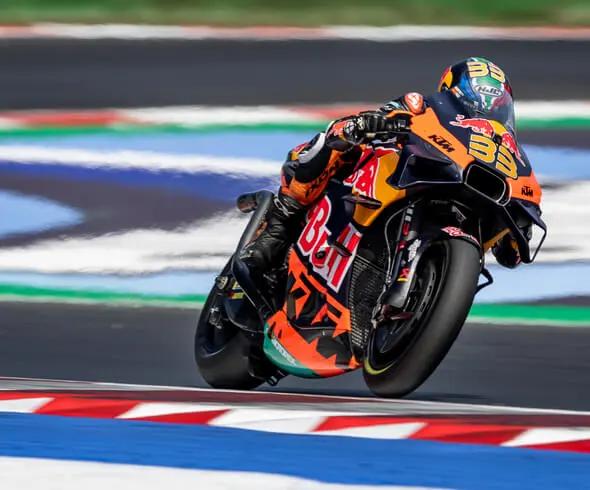
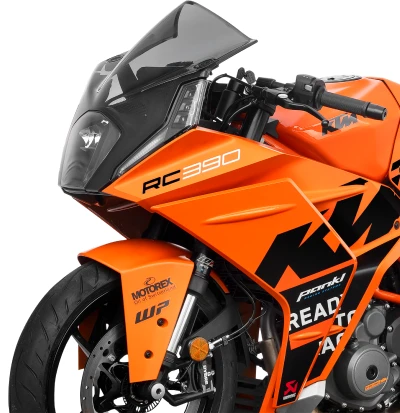
Design & Ergonomics — GP intent
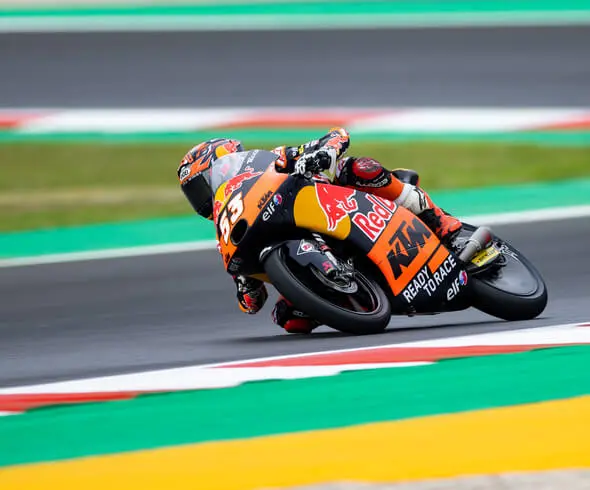
GP-specific bodywork emphasises a tighter aero silhouette and race-inspired graphics across both models. Clip-on adjustability, split seats and small cockpit changes push the rider forward for improved weight distribution. The RC family’s fit and finish remain premium for the class.
If you plan longer rides, small comfort mods (bar spacers, thin seat pad) retain the GP look while improving usability.
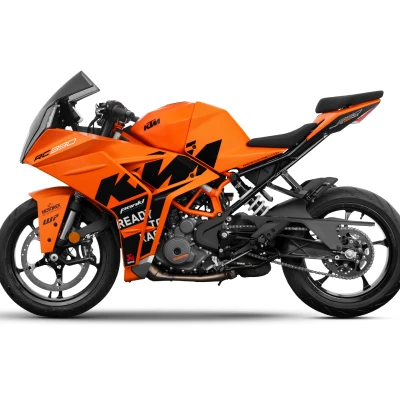
Engine & Performance — two characters, same intent
The RC 200 GP’s 199.5 cc DOHC single is tall-geared and high-revving (25.8 PS, 19.5 Nm), rewarding momentum and that snappy top-end character. The RC 390 GP’s 373.27 cc engine brings significantly more mid-range and top-end power (43.5 PS, 37 Nm) and suits higher-speed circuits better. Both use Bosch EFI and are happiest in the mid-to-high rev window for spirited riding.
Map and exhaust choices make the biggest perceived gains when tuning each variant; the 390 benefits more from freer breathing at high revs while the 200 becomes noticeably punchier with sprocket changes and a light exhaust.
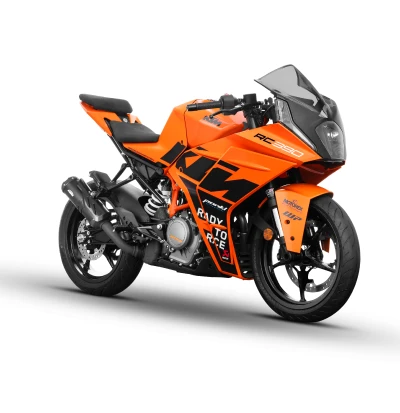
Chassis, Suspension & Handling
Both GPs use a steel trellis frame with WP Apex 43 mm USD forks and an adjustable monoshock. The GP calibration leans towards sharper turn-in and reduced mid-corner wallow: firmer compression with controlled rebound is the recommended starting point for aggressive riding.
Settings differ by weight and power — the 390’s higher mass benefits from slightly firmer front-end tuning to maintain steering precision at speed.
Brakes & Safety
Both variants use strong front braking hardware (320 mm disc with multi-piston radial calipers) and a 230 mm rear disc. Advanced ABS with Supermoto/cornering features (where fitted) provides confidence on track and road. Regular track use benefits from upgraded pads and higher-temp fluid.
Electronics & Features
Shared features include a 5-inch TFT with Bluetooth/navigation, selectable riding modes, traction control and Quickshifter+ (where fitted). The electronics package supports track use without overcomplicating basic maintenance.
Spend time learning rider aids on a safe loop — each mode shows clear differences in throttle mapping and intervention levels.
Owner Experience & Community Opinion
Owners praise the GP editions for the sharper riding feel and distinctive looks. Maintenance follows the existing RC ecosystem, and aftermarket options are plentiful. Common owner mods include suspension calibration, track pads/fluids, compact screens for touring and mild exhaust changes for more character.
The RC 390 GP typically attracts riders wanting higher-speed stability; the RC 200 GP suits those chasing agility and low-weight dynamics.
Pros & Cons
- Race-inspired ergonomics and livery for both variants
- Sharpened suspension and braking for confident track use
- Modern TFT and rider aids retained
- Sporty ergonomics may be tiring on long tours
- GP-specific parts add a modest premium
- Track benefits require maintenance upgrades for longevity
Full Specifications — RC 200 GP vs RC 390 GP
Engine & Performance
| Item | RC 200 GP | RC 390 GP |
|---|---|---|
| Engine Type | Single-cylinder, 4-stroke, liquid-cooled, DOHC, fuel-injected | Single-cylinder, liquid-cooled, DOHC, fuel-injected |
| Displacement | 199.5 cc | 373.27 cc |
| Max Power | 25.8 PS @ 10,000 rpm | 43.5 PS @ 9,000 rpm |
| Max Torque | 19.5 Nm @ 8,000 rpm | 37 Nm @ 7,000 rpm |
| Bore x Stroke | — | 89 mm x 60 mm |
| Compression Ratio | 14.5:1 | 12.88:1 |
| Fuel System | Bosch EFI | Bosch EFI with Ride-by-Wire |
| Starting | Self-start | Self-start |
| Emission | BS6 | BS6-compliant |
Transmission & Clutch
| Item | RC 200 GP | RC 390 GP |
|---|---|---|
| Gearbox | 6-speed manual | 6-speed |
| Clutch | Wet multi-disc (mechanically operated) | PASC™ anti-hopping clutch, mechanically operated |
| Gear Pattern | 1 down, 5 up | 1 down, 5 up |
Chassis & Suspension
| Item | RC 200 GP | RC 390 GP |
|---|---|---|
| Frame | Steel trellis frame | Steel trellis frame with bolt-on aluminum subframe |
| Front Suspension | WP Apex 43 mm USD fork, fully adjustable | WP Apex 43 mm USD forks, fully adjustable |
| Rear Suspension | WP Apex monoshock with 10-step preload | WP Apex monoshock, 10-step adjustable |
| Wheels | Alloy wheels | Alloy wheels |
| Tyres | 110/70-17 front, 150/60-17 rear (tubeless) | 110/70-17 front, 150/60-17 rear (tubeless) |
Brakes & Safety
| Item | RC 200 GP | RC 390 GP |
|---|---|---|
| Front Brake | 320 mm disc with radially mounted 4-piston caliper | 320 mm disc with 4-piston Brembo monobloc caliper |
| Rear Brake | 230 mm disc with 1-piston caliper | 230 mm disc with single-piston caliper |
| ABS | Dual-channel ABS with Supermoto mode | Bosch 9.1ME with cornering and Supermoto modes |
Dimensions & Weight
| Item | RC 200 GP | RC 390 GP |
|---|---|---|
| Kerb Weight | 160 kg | 172 kg (approx.) |
| Seat Height | 835 mm | 835 mm |
| Ground Clearance | 158 mm | 153 mm |
| Fuel Tank Capacity | 13.7 litres | 13.7 litres |
| Wheelbase | 1341 mm | ~1355 mm |
Electronics & Features
| Item | RC 200 GP | RC 390 GP |
|---|---|---|
| Instrument Console | 5-inch TFT with Bluetooth | 5-inch TFT with Bluetooth |
| Navigation | Turn-by-turn navigation assist | Turn-by-turn navigation |
| Rider Aids | Traction control, riding modes, Supermoto ABS | Traction control, riding modes, Quickshifter+ (where fitted) |
| Other | USB charging, shift light, hazard switch | Adjustable clip-ons, split seat, service indicator |