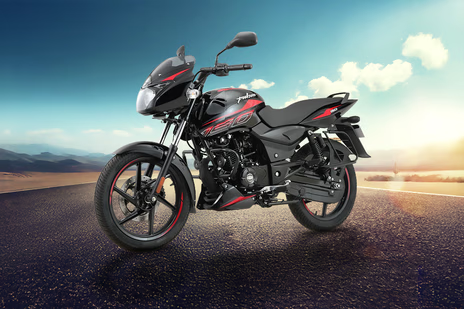
Bajaj Pulsar 150 — RevSync Review
India’s most iconic 150cc motorcycle — a practical, reliable daily rider with approachable performance, sensible ergonomics and low-cost ownership.
Jump to Full SpecificationsFirst Impressions & Ride Summary
The Pulsar 150 is a no-nonsense 150cc package that has earned its reputation for reliability and everyday usability. The 149.5 cc Twin Spark DTS‑i motor produces a claimed 14 PS and 13.25 Nm, delivering approachable performance for city riding and relaxed highway cruising.
It’s the kind of bike that covers daily commutes, weekend errands and occasional longer runs without fuss — confident brakes, predictable handling and a comfortable riding posture make it a practical pick.
Design & Ergonomics
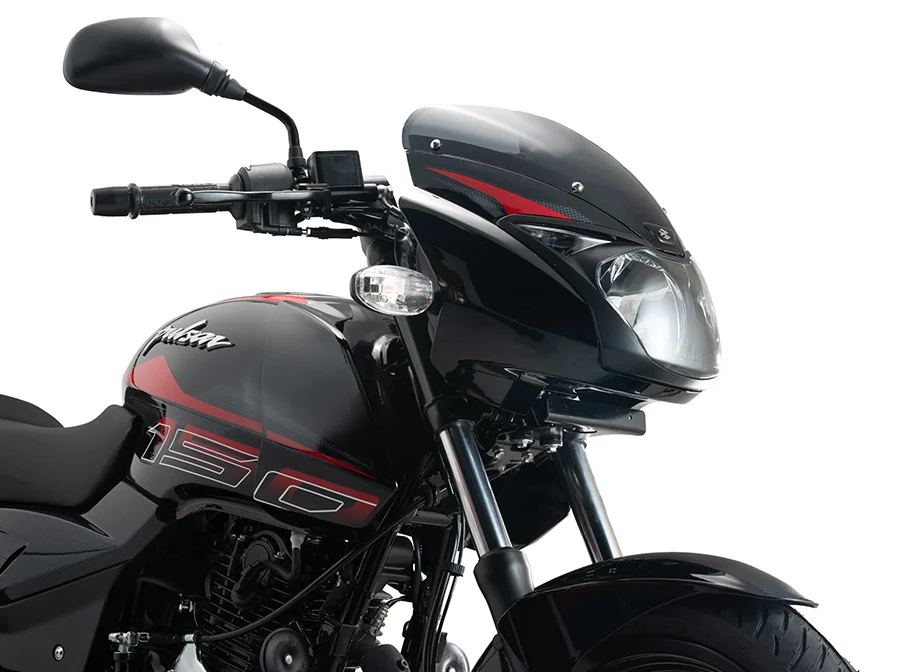
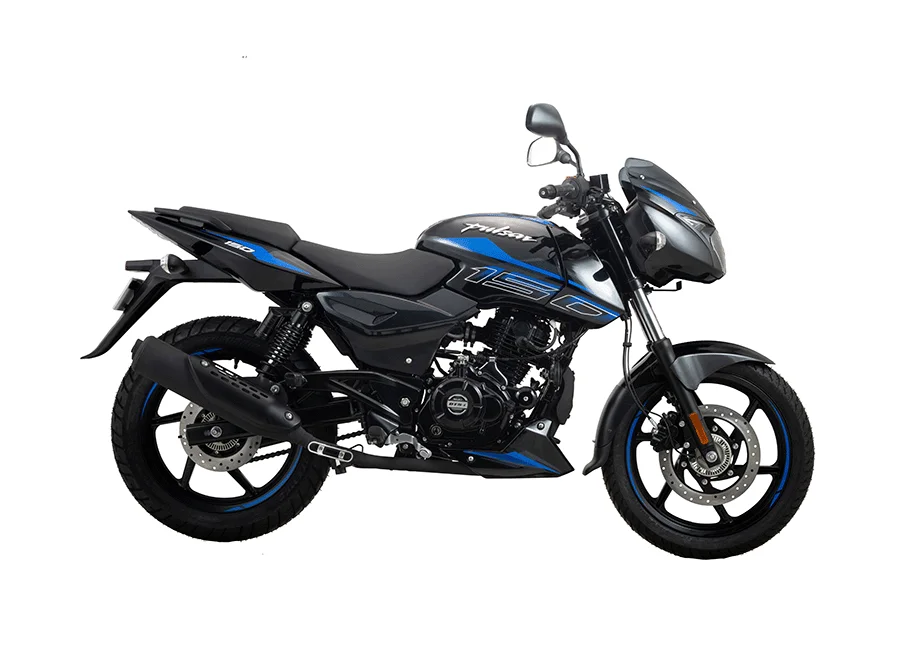
The Pulsar 150 wears classic commuter-sport styling: a compact tank, sculpted side panels and a practical seating position. The 785 mm seat height is broadly accessible while the rider triangle balances comfort and control for mixed usage.
Higher variants bring small tech upgrades like Bluetooth and digital instruments, but the core ergonomics remain user-friendly and unobtrusive.
If you plan longer rides, a small seat pad and light bar riser improve long-distance comfort without changing the bike’s handling character.
Engine & Performance
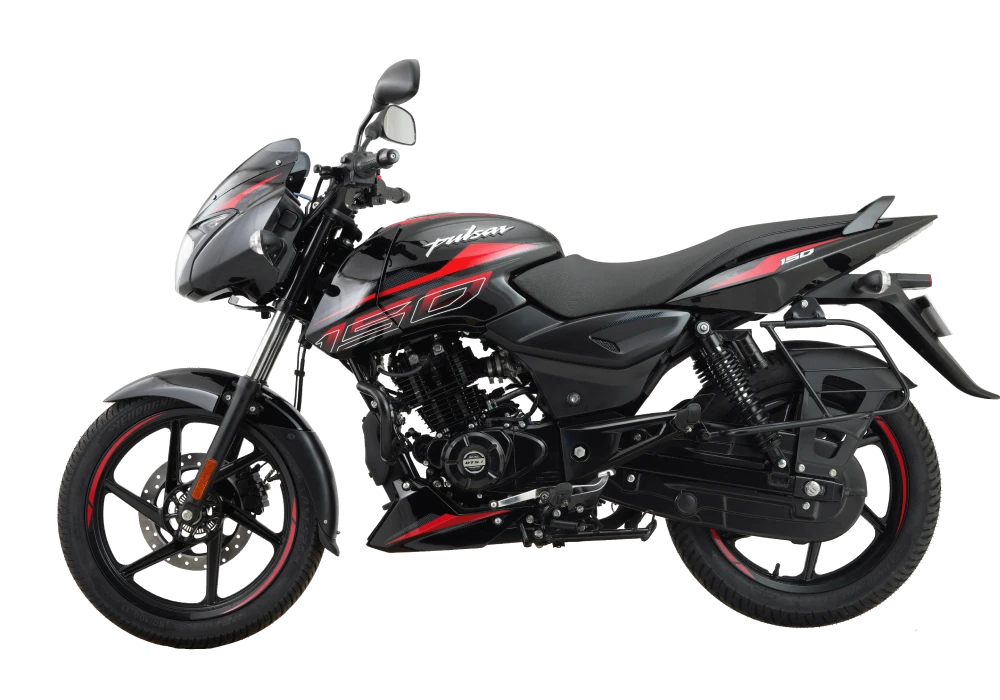
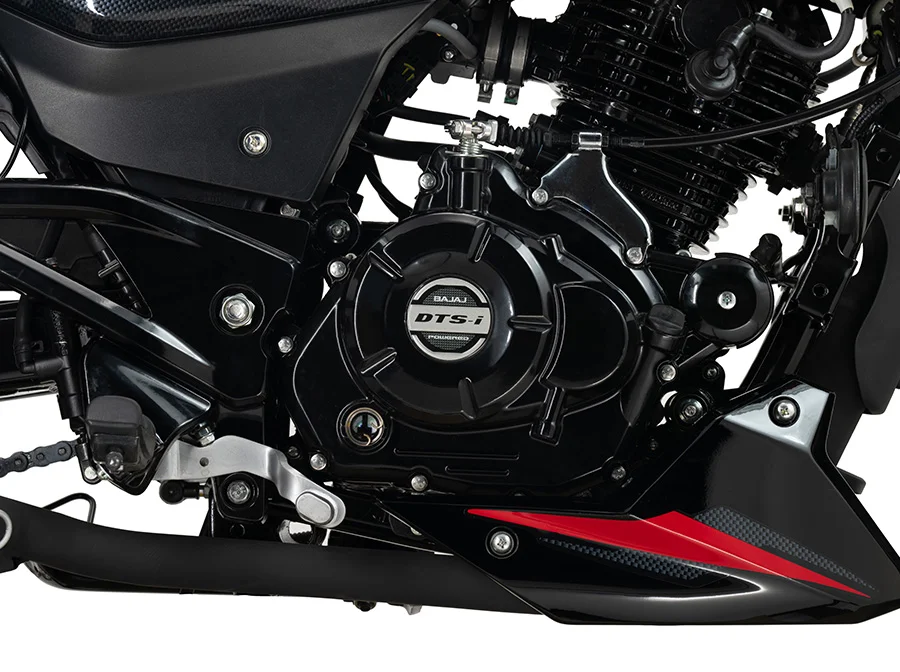
The 149.5 cc 4-stroke Twin Spark DTS‑i engine produces 14 PS @ 8,500 rpm and 13.25 Nm @ 6,500 rpm. Fuel injection smooths throttle response and improves cold starts compared with older carburetted versions. The five-speed gearbox is well-spaced for both city acceleration and steady cruising.
Claimed top speed sits around 110 km/h with real-world economy in the high 40s km/l for conservative riders, making it an economical choice for daily use.
For daily commuters, modest gearing changes or tyre choice will affect acceleration perception more than raw power — small mods can noticeably improve city rideability.
Chassis & Handling
The 1,320 mm wheelbase and 148 kg kerb weight provide a stable platform without being cumbersome. Telescopic forks up front and gas-filled twin shocks at the rear (with adjustable preload) give a composed ride — firm enough to feel stable at speed, comfortable enough for city surfaces.
Slightly firmer rear preload helps reduce mid-corner wallow when riding with luggage or pillion.
Braking & Safety
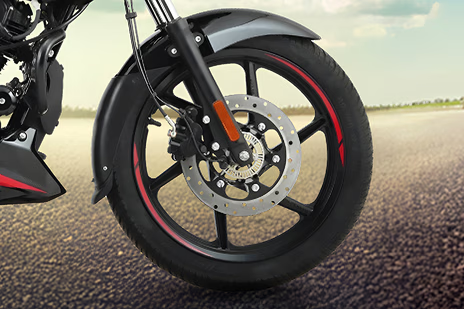
Front disc is standard while rear disc is optional on higher variants; single-channel ABS is available depending on market/variant. The braking package is predictable and confidence-inspiring for typical urban and suburban riding.
For riders wanting firmer initial bite on track-like stops, a higher-friction pad compound coupled with regular fluid changes makes the biggest difference.
Comfort & Practicality
A 15 L fuel tank, comfortable seat and sensible ergonomics make the Pulsar 150 versatile for daily commuting and longer rides. Pillion provisions and a grab rail are standard, and useful modern features like Bluetooth connectivity appear on higher trims.
Features & Electricals
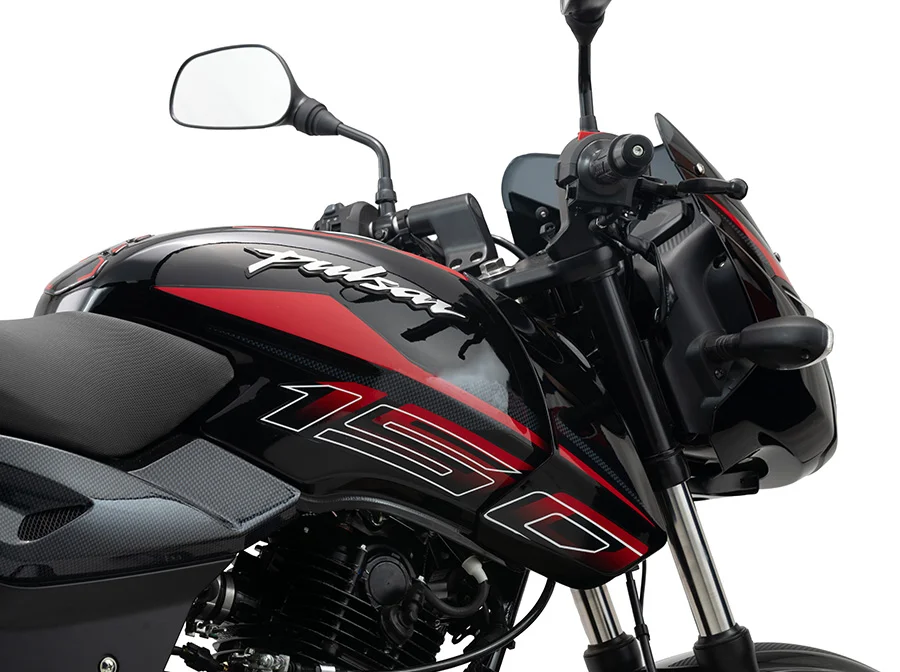
Variants may include a digital instrument cluster with analog tachometer, Bluetooth mobile notifications, real-time mileage readouts and hazard indicators on some trims. LED tail light and modern safety features are available across the range.
Owner Experience & Community Opinion
The Pulsar 150 remains popular due to its simple mechanical layout, straightforward maintenance and a broad dealer/service network. Owners typically cite strong long-term reliability and decent parts availability as key benefits.
Common owner mods include minor suspension tweaks, seat padding and cosmetic upgrades — most keep the bike mechanically simple.
Pros & Cons
- Reliable and easy to maintain
- Good mid-range performance for the class
- Comfortable ergonomics and large fuel tank
- Variants offer modern connectivity features
- Single-channel ABS in many variants (not dual-channel)
- Not the fastest 150cc in outright performance
- Some rivals offer more advanced electronics and lighter weight
Full Specifications
Engine & Performance
| Engine Type | 4-Stroke, 2-Valve, Twin Spark DTS-i, BS6 compliant |
|---|---|
| Displacement | 149.5 cc |
| Max Power | 14 PS @ 8500 rpm |
| Max Torque | 13.25 Nm @ 6500 rpm |
| Cooling | Air-cooled |
| Fuel System | Fuel Injection (FI) |
| Transmission | 5-speed manual |
| Top Speed | ~110 km/h (claimed) |
| Mileage | ~45–50 km/l (varies by riding style) |
Dimensions & Weight
| Length | 2055 mm |
|---|---|
| Width | 765 mm |
| Height | 1060 mm |
| Wheelbase | 1320 mm |
| Ground Clearance | 165 mm |
| Kerb Weight | 148 kg |
| Seat Height | 785 mm |
| Fuel Tank Capacity | 15 litres |
Suspension & Underpinnings
| Front Suspension | Telescopic forks |
|---|---|
| Rear Suspension | Gas-filled twin shocks with adjustable preload |
Brakes & Safety
| Front Brake | Disc (standard) |
|---|---|
| Rear Brake | Disc (optional) / Drum (market-dependent) |
| ABS | Single-channel ABS available on higher variants |
Wheels & Tyres
| Wheels | Alloy |
|---|---|
| Front Tyre | 80/100-17 tubeless |
| Rear Tyre | 100/90-17 tubeless |
Features & Electronics
| Instruments | Digital display with analog tachometer (variant dependent) |
|---|---|
| Connectivity | Bluetooth & mobile notifications on advanced variants |
| Lighting | LED tail light, hazard indicator (variant dependent) |