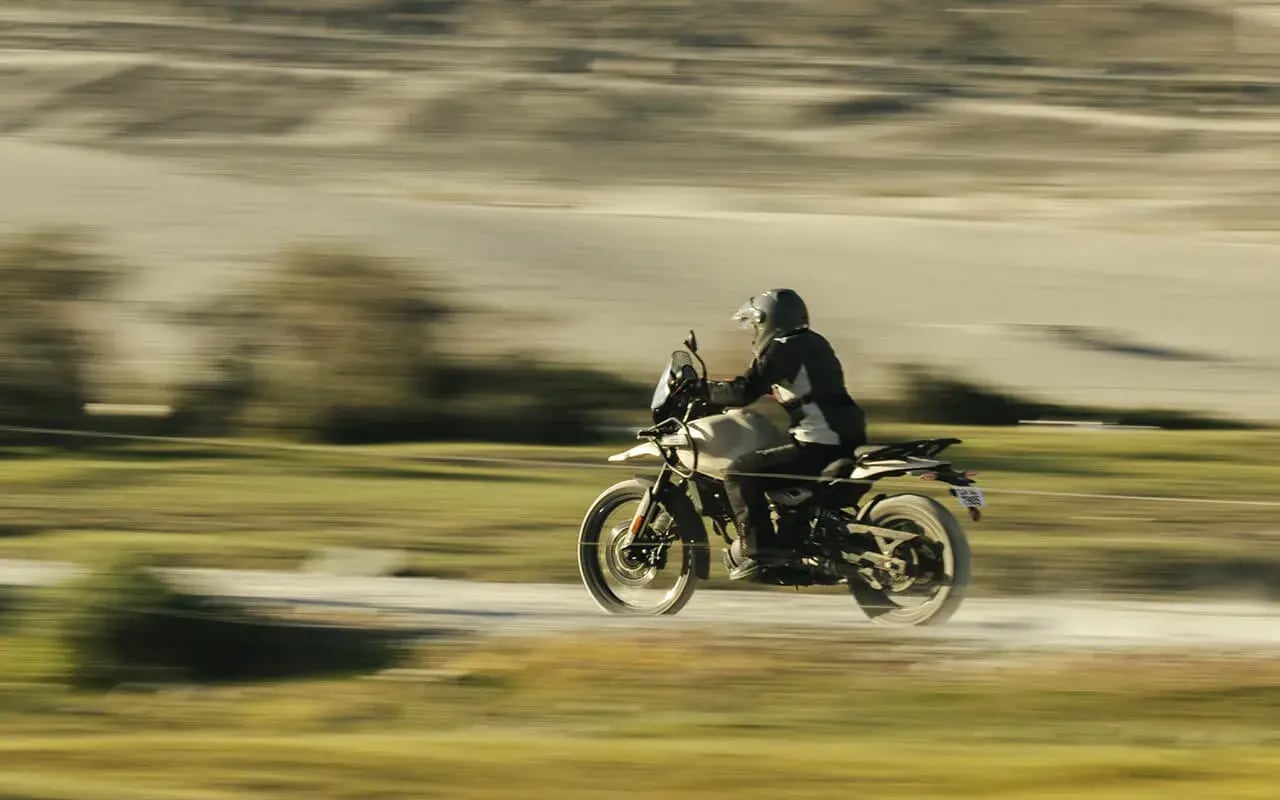
Royal Enfield Himalayan 450 — RevSync Review
The new Himalayan 450 reimagines the classic long-travel adventure formula with a 452 cc liquid-cooled Sherpa engine, modern electronics and a chassis designed for real off-road capability while remaining comfortable on long highway hauls.
Jump to Full SpecificationsFirst Impressions & Ride Summary
The Himalayan 450 immediately feels like a more purposeful, modern adventure bike compared to its predecessors. The liquid-cooled Sherpa motor delivers smooth, tractable power across the rev range — the emphasis is on controllable torque rather than peaky horsepower. The 6-speed gearbox and slip & assist clutch make day-to-day riding relaxed, while the riding modes and switchable ABS add confidence when the surface gets sketchy.
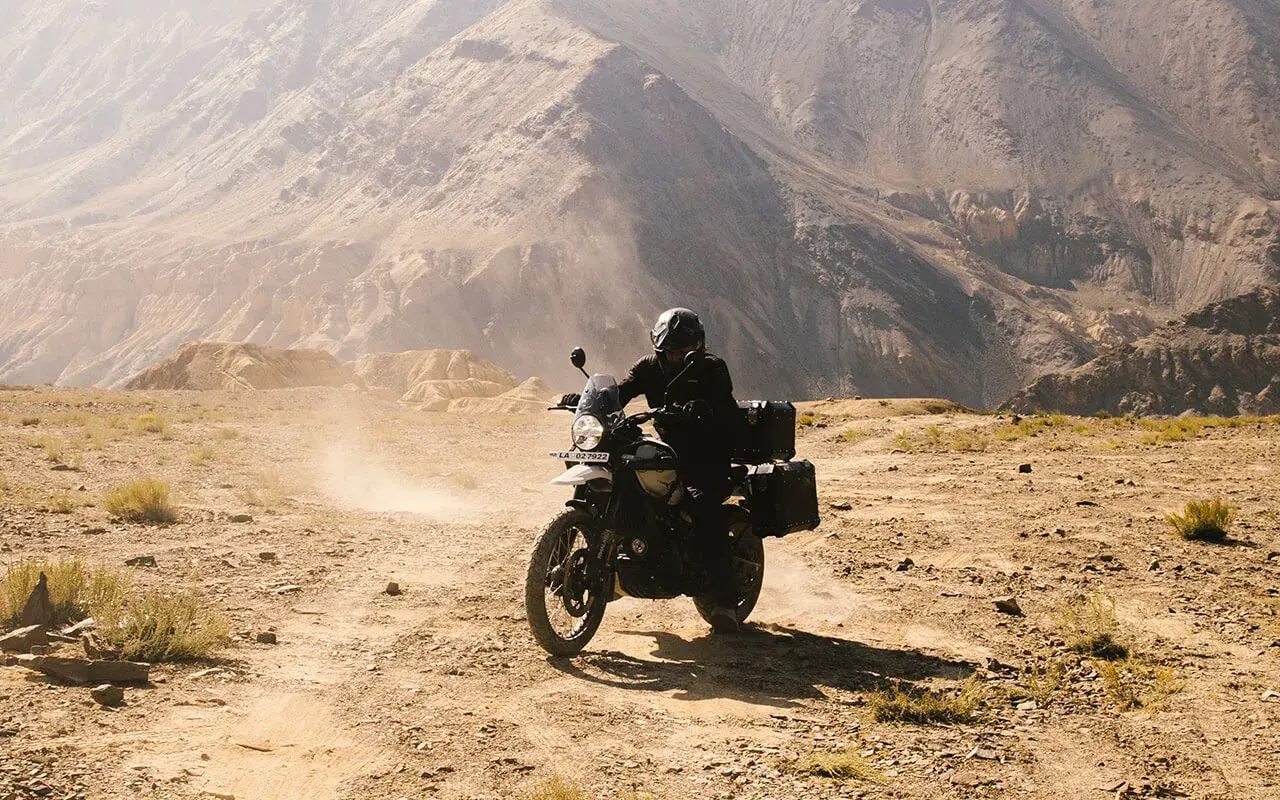
On dirt the bike’s long-travel suspension and 21″/17″ wheel combo soak bumps and encourage momentum; on the highway the Himalayan stays stable with comfortable ergonomics for long stints.
Design & Ergonomics
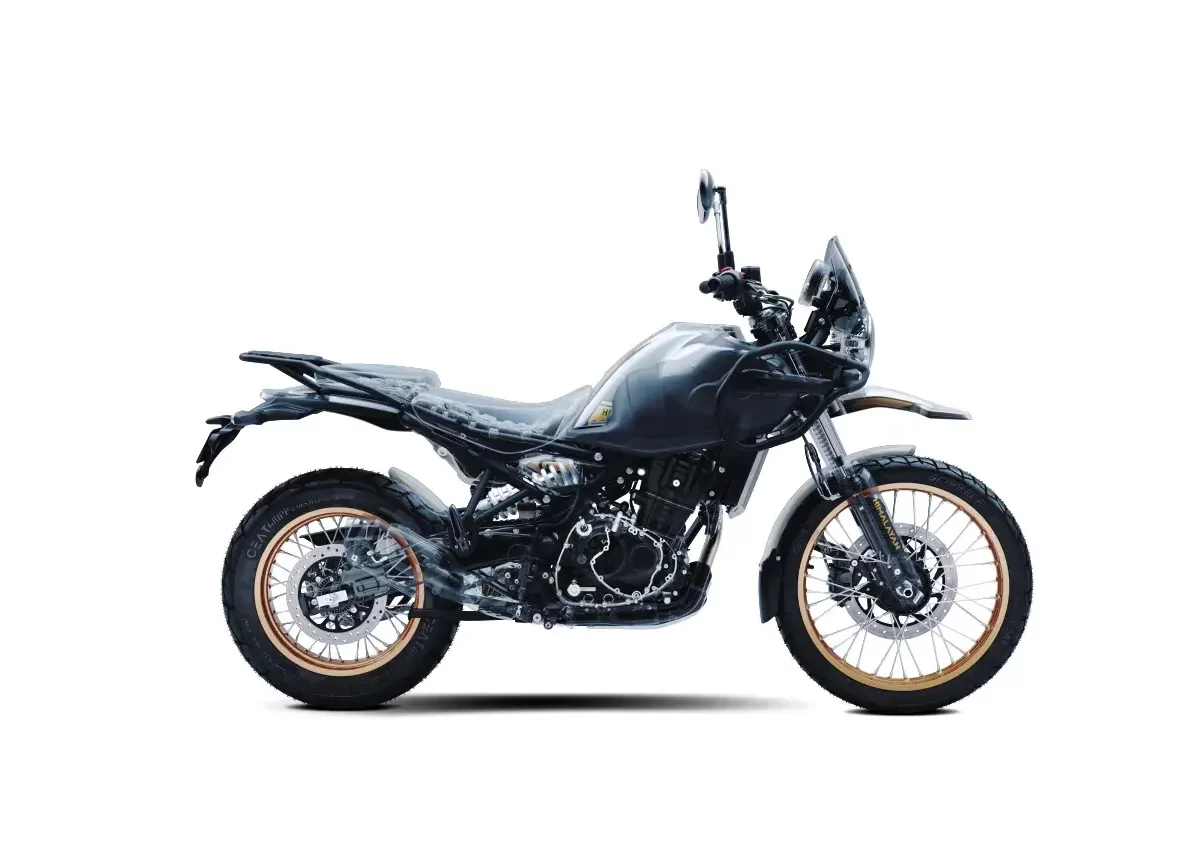
The Himalayan 450 keeps the rugged, no-nonsense silhouette of an ADV but with cleaner, modern detailing. The trellis frame and purposeful bodywork give it a substantial presence without feeling bulky. Ergonomics are upright and long-legged; seat layout and handlebar position favour comfort on long days and control when standing on the pegs.
If you plan heavy luggage or long multi-day tours, consider a slightly firmer rear spring and a tailored seat pad for added comfort — the stock setup is comfortable but can be optimized for load and rider preference.
Engine & Performance
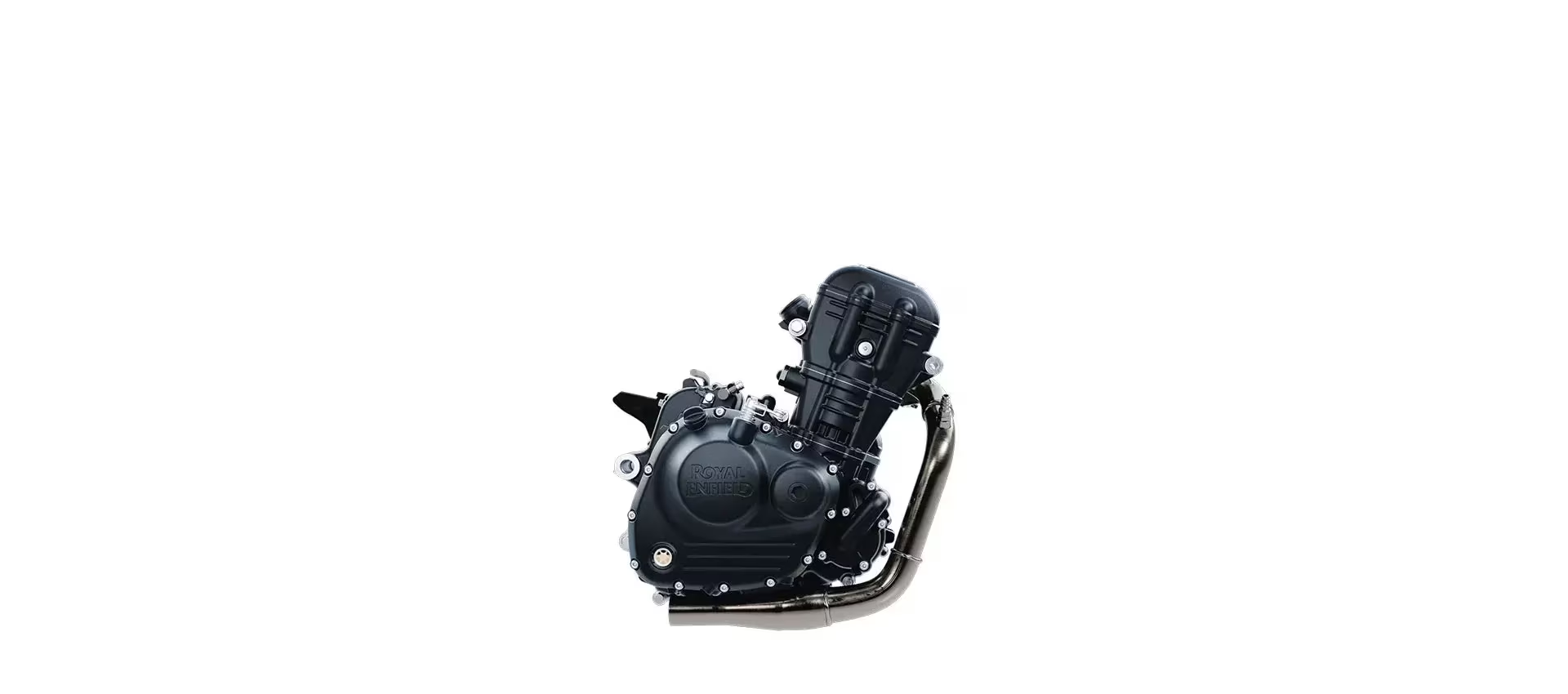
The 452 cc Sherpa single-cylinder (liquid-cooled, DOHC, 4-valve) is tuned for usable delivery — roughly 40 PS and 40 Nm. Throttle response is managed via ride-by-wire and the EFI mapping provides predictable power delivery. Peak power arrives high in the revs, but the engine’s best tractability is in the midrange where most overtakes and technical trail sections live.
The 6-speed gearbox is well-spaced for touring and off-road use; the slip & assist clutch eases clutch work in technical sections and reduces lever effort for long rides.
For riders wanting extra midrange punch, a remap and a freer exhaust (where legal) are the usual ways to sharpen throttle response without compromising reliability.
Chassis, Suspension & Handling
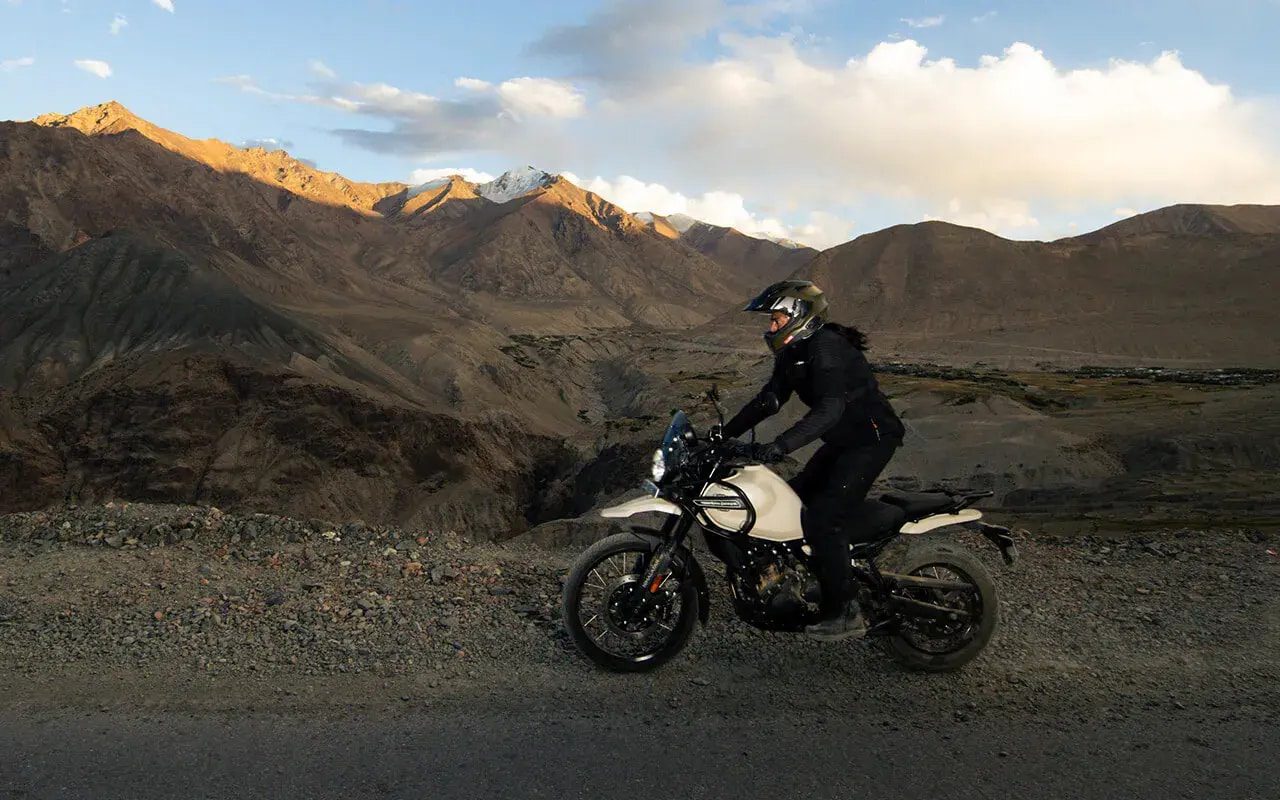
The new trellis ADV frame paired with 43 mm USD forks and a link-type monoshock (200 mm travel each end) yields confidence over rough ground while retaining composure on sweepers. The wheelbase (1510 mm) and balanced geometry help stability at speed and predictable steering inputs at lower speeds.
Suspension compliance is a highlight — roll through rough surfaces without excessive jarring while maintaining enough feedback to pick a line on loose surfaces.
If you do heavy off-road work, consider progressive springs and revalving for extended travel performance; for loaded touring, a firmer rear spring and preload adjustment will stabilise the bike under weight.
Brakes & Control
Front and rear discs with switchable dual-channel ABS provide sound stopping power and the option to reduce rear intervention for off-road situations. Lever feel is progressive and the system’s interventions are predictable — a must for confidence on mixed surfaces.
ABS mapping that allows more rear slip at lower speeds is particularly useful in trail sections where controlled slides help manage traction on loose surfaces.
For more aggressive off-road braking, pair a firm pad compound with frequent fluid changes when running intense off-road days to maintain consistent bite.
Electronics & Rider Aids
The Himalayan 450 packs a modern electronics suite: a 4″ colour TFT with Bluetooth and navigation, riding modes, gear indicator, service reminders and switchable ABS. Ride-by-wire enables smoother mode transitions and the mobile app integration brings Tripper-style turn-by-turn guidance for touring.
Practical additions like a USB charging port and luggage-ready racks keep the bike useful for long distance travel.
Learning the behaviour of each ride mode in a controlled environment will pay dividends when you need to quickly adapt between highway, wet or off-road conditions.
City, Highway & Usability
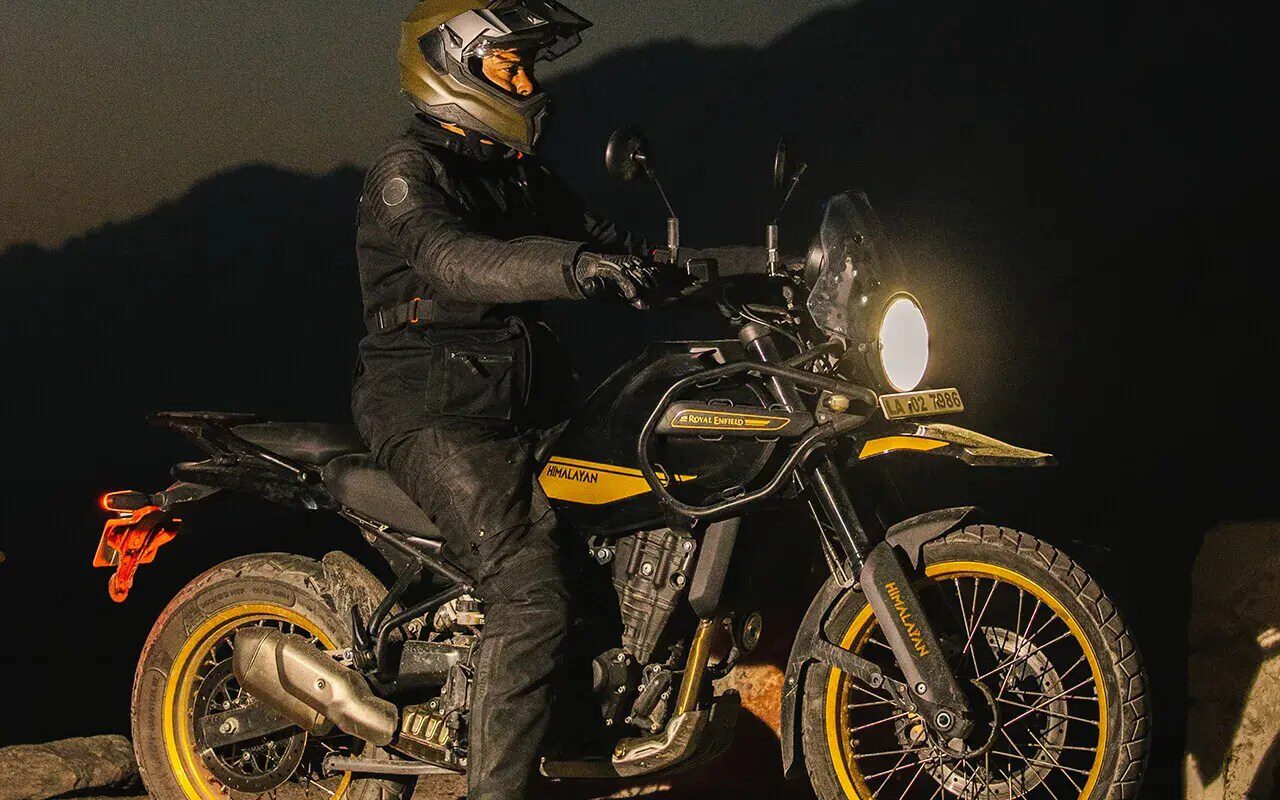
In urban settings the Himalayan is manageable thanks to its chassis balance and tractable torque; its height and weight mean it’s not the nimblest commuter but it’s forgiving. On highways the ergonomics and wind management are decent — a touring screen helps at sustained speeds. Real-world fuel economy hovers around ~30 km/l depending on riding style, making the 17 L tank a sensible compromise for long rides.
For longer tours, pack smartly and tune suspension for load — the bike scales up well with luggage when suspension and tyre pressures are adjusted correctly.
Owner Experience & Community Opinion
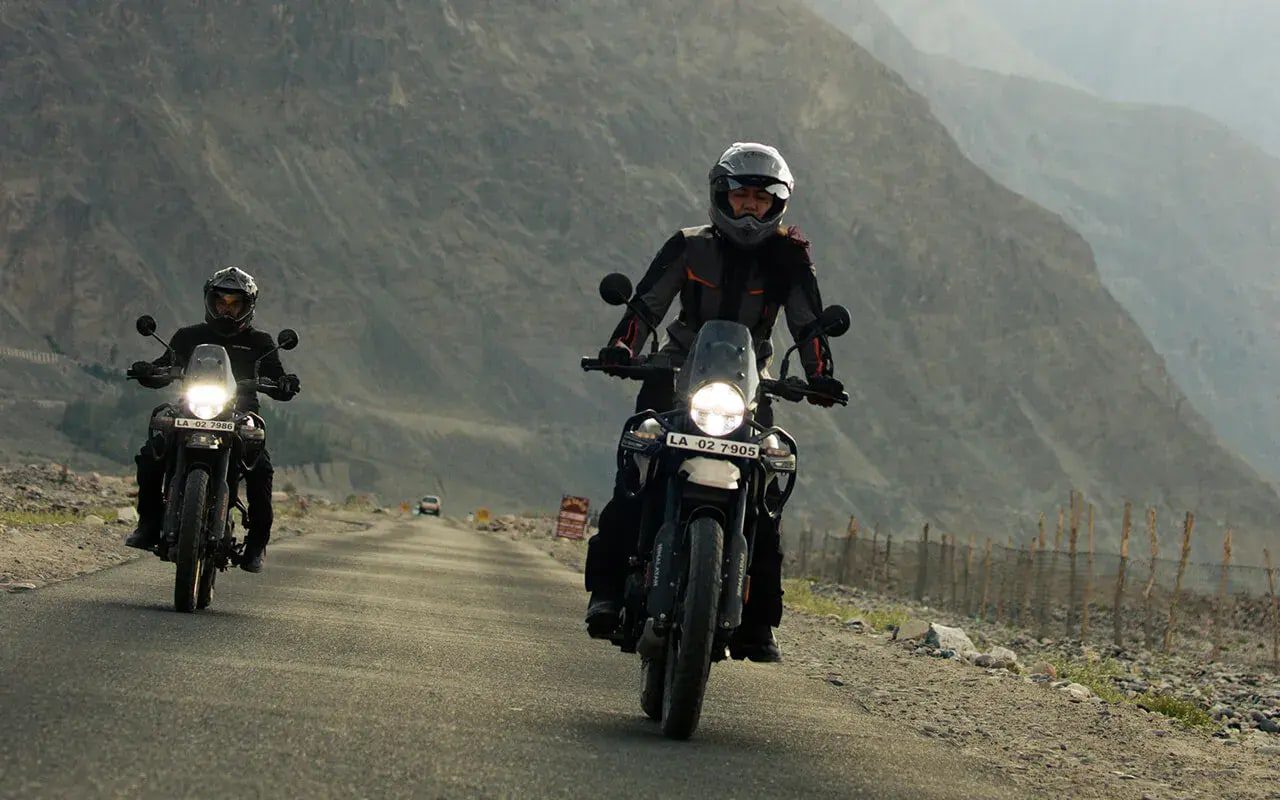
Early owner feedback highlights the Himalayan 450’s approachable performance and improved long-distance comfort compared with older models. Serviceability and dealer support will vary by market but Royal Enfield’s growing network means spares and accessories are increasingly accessible. The aftermarket already offers skid plates, luggage systems and ergonomic upgrades targeted at long-distance and off-road riders.
Common owner upgrades: luggage racks and hard cases, reinforced crash protection, better footpeg rubbers and wind deflectors for long-distance comfort.
Pros & Cons
- Strong midrange and tractable engine for mixed terrain
- Long-travel suspension and 21/17 wheel combo for real off-road capability
- Modern electronics and connected TFT for contemporary touring needs
- Kerb weight near 196 kg may be felt at very low speeds
- Top speed is moderate (around 135–140 km/h claimed typical) — not focused on high-speed touring
- Some accessories and regional racks may vary by market
Full Specifications
Engine & Transmission
| Engine Type | Single-cylinder, 4-stroke, 452 cc, liquid-cooled, DOHC, 4-valve |
|---|---|
| Displacement | 452 cc |
| Max Power | ~40 PS @ 8,000 rpm |
| Max Torque | 40 Nm @ 5,500 rpm |
| Fuel System | Electronic fuel injection; ride-by-wire |
| Emission | BS6 2.0 compliant |
| Transmission | 6-speed manual, wet multi-plate slip & assist clutch |
| Claimed Top Speed | ~135–140 km/h (typical) |
Chassis, Suspension & Wheels
| Frame | New trellis frame — ADV chassis |
|---|---|
| Front Suspension | 43 mm USD fork, 200 mm travel |
| Rear Suspension | Link-type monoshock, 200 mm travel |
| Brakes | Front & rear disc with dual-channel switchable ABS |
| Tyres | 90/90-21 front, 140/80-17 rear |
| Wheelbase | 1510 mm |
Dimensions & Weight
| Length × Width × Height | 2245 × 852 × 1316 mm (approx, with screen) |
|---|---|
| Seat Height | 825 mm standard; adjustable to ~845 mm; optional low seat ~805 mm (market dependent) |
| Ground Clearance | 230 mm |
| Kerb Weight | ~196 kg (variant/equipment dependent) |
| Fuel Tank Capacity | 17 L (reserve ~3.4 L) |
| Payload Capacity | Approx. 198 kg |
Electronics & Features
| Instrument Cluster | 4″ colour TFT, multi-info display |
|---|---|
| Connectivity | Bluetooth, mobile app integration, navigation (Tripper/Google maps in some markets) |
| Riding Aids | Switchable ABS, riding modes, hazard lights, engine kill switch |
| Console Info | Gear indicator, fuel gauge, temp & malfunction indicators, 2 tripmeters, service-due indicator |
| Practical | USB charging port, split seat, pillion grab rails, luggage-ready design (racks vary by region) |
Performance & Misc
| Real-World Mileage | ~30 km/l depending on use |
|---|---|
| Top Speed (typical) | ~135–140 km/h |
| Additional | Tripper-style nav, service reminders, engine temp gauge, USB charging |