
KTM RC 390 — RevSync Review
RC 390 is KTM’s most focused small-displacement sportbike — a compact, high-performance package that blends a torquey single-cylinder engine with a razor-sharp chassis and modern electronics for confident road and track use.
Jump to Full SpecificationsFirst Impressions & Ride Summary
Out of the gate the RC 390 feels exceptionally composed for a sub-400 sportbike. The combination of a strong midrange and a grippy chassis makes it accelerate out of corners with confidence rather than brutish shove. The bike’s steering is quick but not nervous — turn-in is immediate and the frame keeps everything predictable even as you up the pace.
On the road it’s entertaining and easy to place; on a tight track it rewards clean lines and throttle control. Compared with smaller RCs it carries speed longer and recovers quickly from small mistakes.
Design & Ergonomics
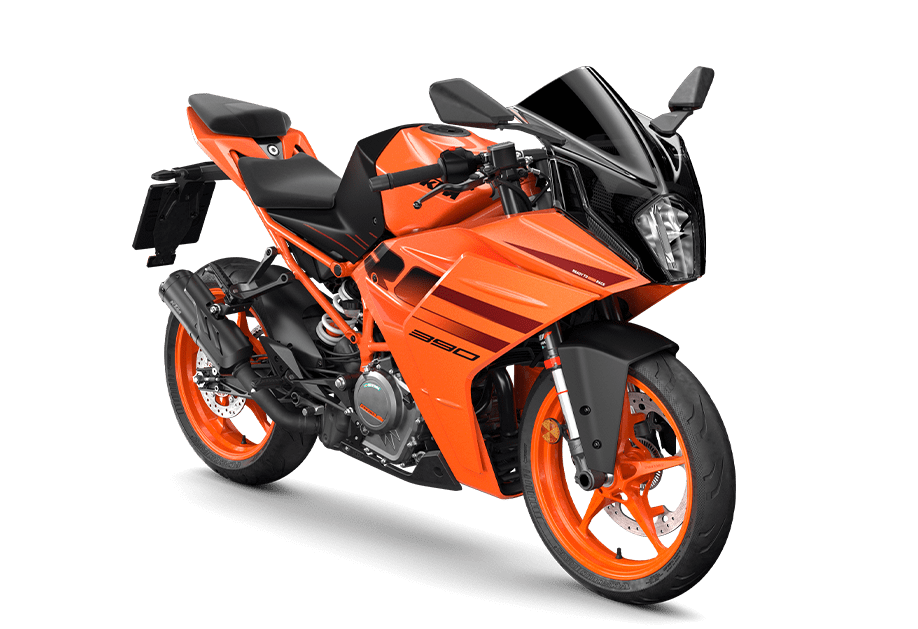
The RC 390 uses race-first geometry: a compact cockpit, low clip-ons and a tucked riding position that encourages a forward stance. Visual cues — sharp fairings, integrated DRLs and a stacked tail — feel cohesive and aggressive without being fussy.
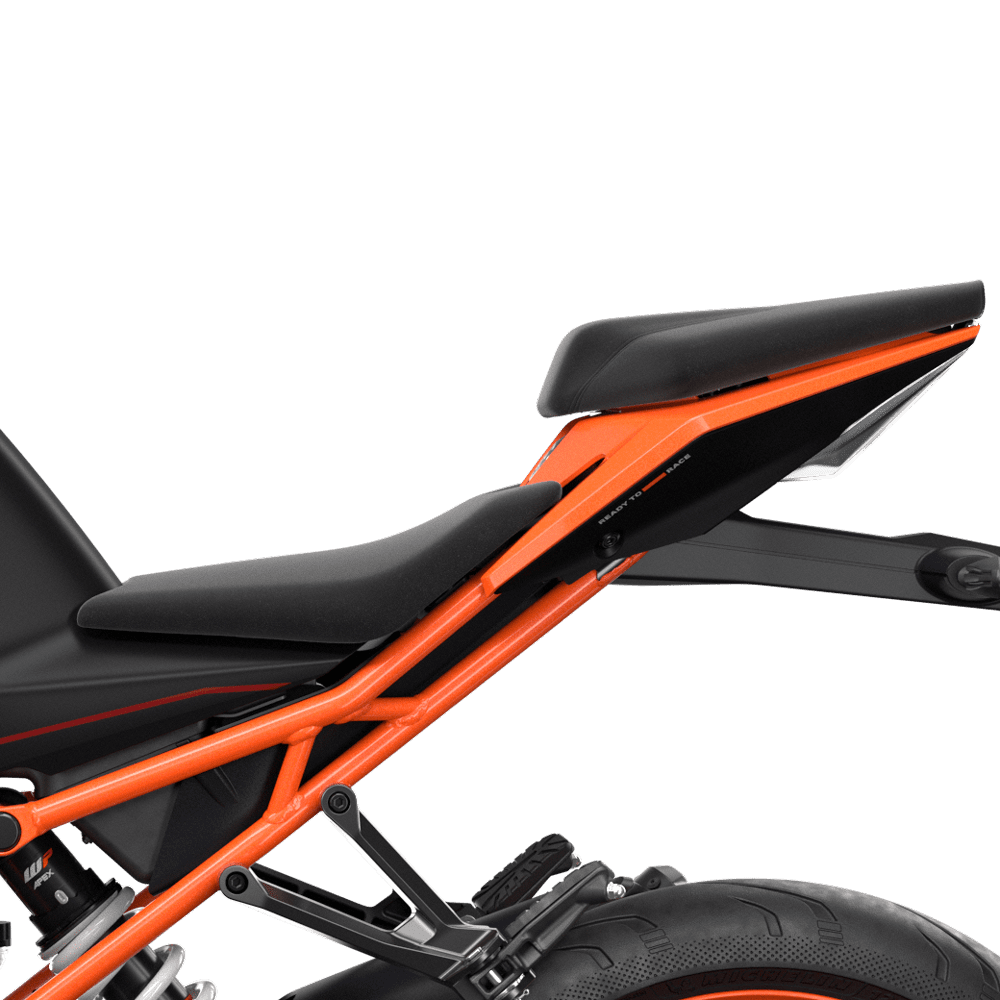
Materials and fit are premium for the class. The split-seat design and pillion ergonomics are functional, though long-distance comfort requires mild mods (seat pad or bar risers) if you plan extended tours.
If you ride predominantly on the street, a small spacer under the bars and a touring screen will make the RC significantly more usable without harming its handling character.
Engine & Performance
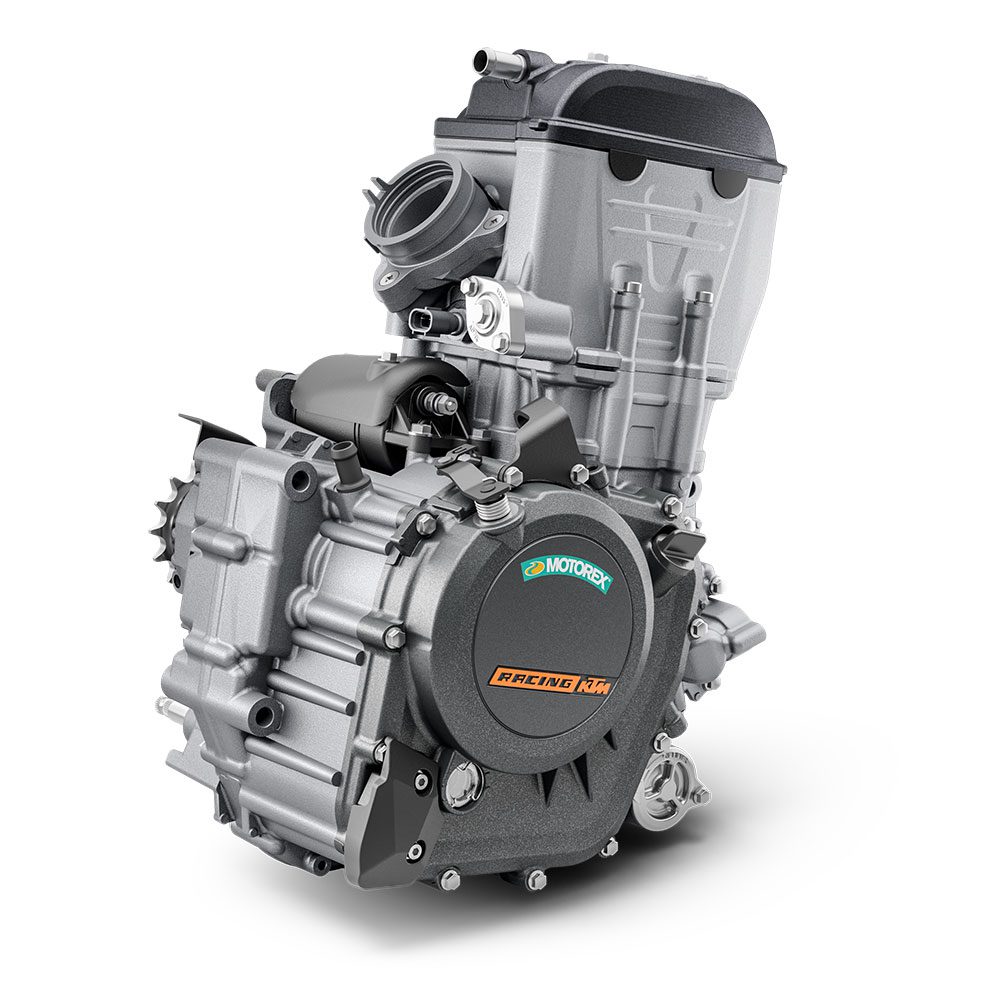
The 373.27 cc single-cylinder motor is a standout — it produces 43.5 PS and 37 Nm with a broad usable band. Throttle response is sharp and linear between 4,000–9,000 rpm, with the midrange delivering the most real-world punch. Peak is high, but the engine is happiest when kept moving through mid revs for strong corner exits.
Transmission is precise; Quickshifter+ works cleanly both up and down. The slipper/PASC clutch reduces chatter on aggressive downshifts and is particularly useful during back-to-back corner entries on track.
For riders seeking faster lap times, map changes and a freer-flowing exhaust yield the most noticeable gains while preserving street manners.
Handling, Chassis & Suspension
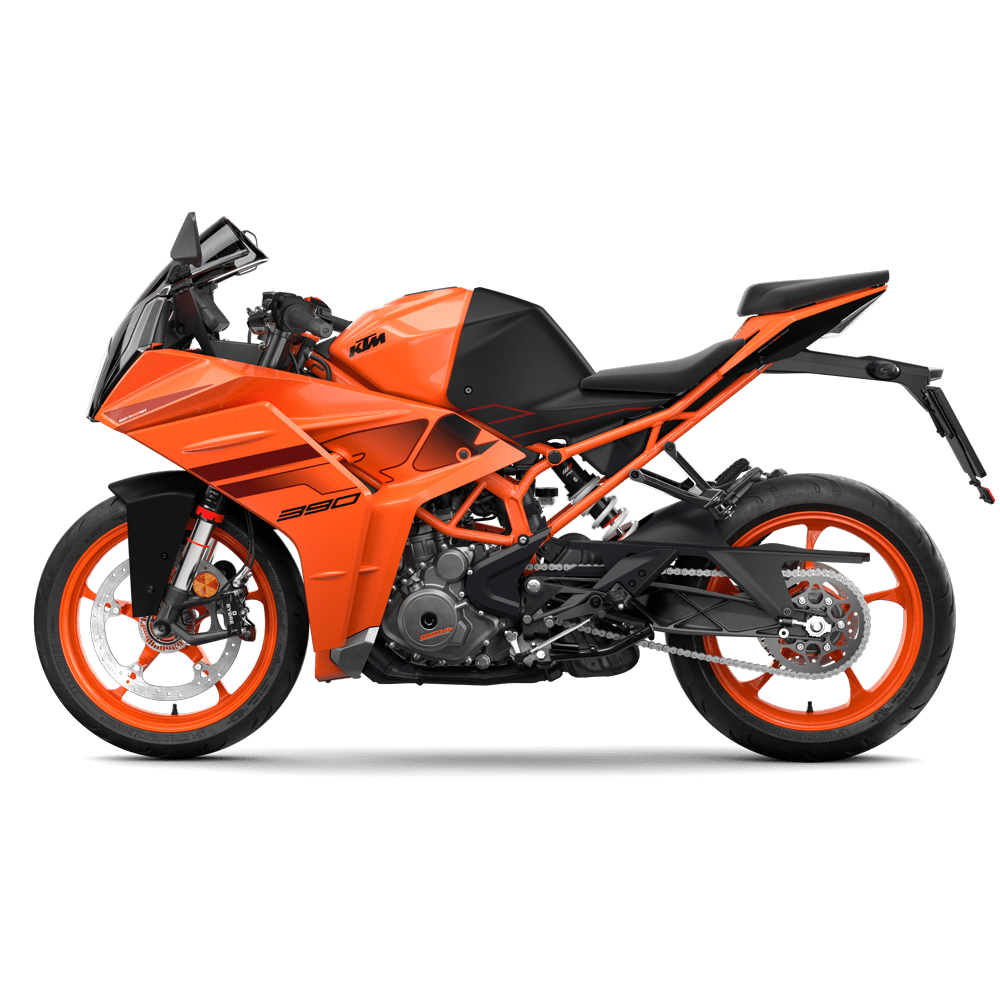
The steel trellis frame combined with a lightweight aluminum subframe gives the RC 390 a pleasing rigidity that translates into accurate feedback. WP Apex inverted forks and a linked monoshock allow precise tuning for road or track; set them firmer for circuit use and soften slightly for rougher urban surfaces.
Geometry (short wheelbase, sporting rake) produces a very agile feeling — it’s ideal for quick direction changes. The chassis masks weight at speed; once committed, it remains very stable through mid-corner and on the power.
Ride setups that favour slightly stiffer rebound at the rear tend to improve turn-in stability and reduce mid-corner wallow for aggressive riders.
Brakes & Control
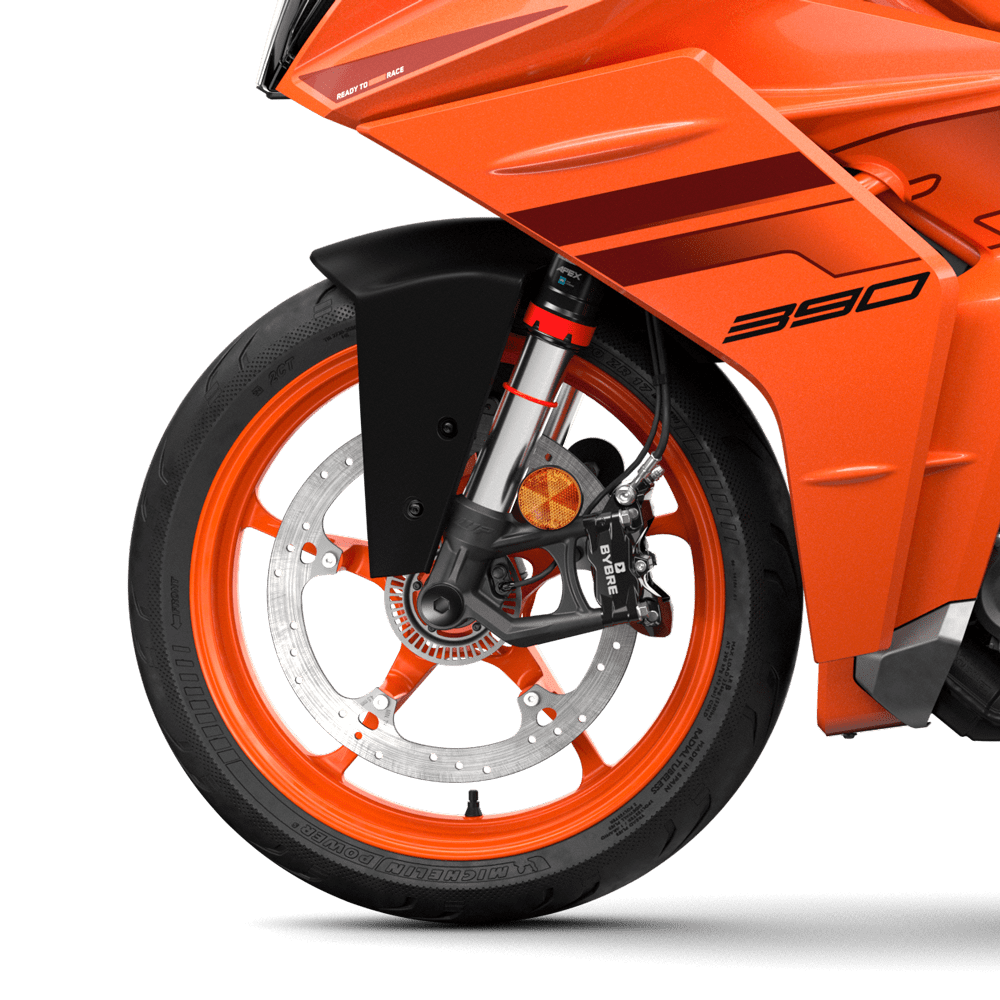
Brembo-sourced hardware up front with a 320 mm disc and a 4-piston caliper gives real stopping authority. The rear disc is strong and coupled with a dual-channel Bosch ABS setup that includes cornering and Supermoto modes for advanced control and controlled slides.
Feel and modulation are excellent; the optional Brembo radial master cylinder (on some trims) sharpens initial bite for track use without being grabby in town.
For repeated heavy braking during track days, choose a high-friction pad compound and check fluid change intervals to avoid fade and preserve consistent lever feel.
Electronics & Rider Aids
The RC 390 features a modern electronics suite: Bosch 9.1ME cornering ABS, multi-level MTC traction control, Quickshifter+, ride modes, and a 5-inch TFT with Bluetooth and turn-by-turn navigation. These systems are well-integrated and feel coherent — interventions are smooth and predictable.
Bluetooth connectivity includes call/SMS alerts and music control; a USB charging port is handy for long rides. Supermoto mode (where available) disables rear ABS to let skilled riders slide the rear safely for controlled drifts.
Electronics are mature for the class — they let riders push harder while minimising risk. Consider learning each mode on a low-speed day to understand the varying traction/ABS behaviours.
City, Highway & Usability
In traffic the RC 390 needs a brief adaptation period due to its sport position, but its compact size and light steering make low-speed manoeuvres manageable. Taller riders may find the seat slightly firm on long rides — a mild seat mod helps significantly.
On the highway the fairing does a reasonable job; wind management for long stints improves with an aftermarket screen. Fuel range with a 13.7 L tank and realistic consumption (25–30 km/l) is good for spirited day trips.
If you plan touring, add a small touring screen and a seat pad — the rest of the bike is robust enough to handle long-distance duties with minimal compromise.
Owner Experience & Community Opinion
Owners commonly praise the RC 390 for delivering big-bike thrills with small-bike simplicity. Service intervals, dealer networks and parts availability are generally good. The aftermarket is rich — everything from suspension uprates to race exhausts and touring screens is widely available.
Common owner mods: strap-on screen for touring, upgraded brake pads for track days, and tail tidies or belly pans for cleaner looks and small weight savings.
Pros & Cons
- Strong midrange power and usable torque
- Class-leading electronics and braking
- Sharp chassis that rewards skill
- Sporty ergonomics can fatigue on very long rides
- Some advanced electronics limited to higher trims
- Wind protection is average without aftermarket screen
Full Specifications
Engine & Transmission
| Engine Type | Single-cylinder, 4-stroke, liquid-cooled, DOHC, fuel-injected |
|---|---|
| Displacement | 373.27 cc |
| Max Power | 43.5 PS @ 9,000 rpm |
| Max Torque | 37 Nm @ 7,000 rpm |
| Compression Ratio | 12.6:1 (approx.) |
| Lubrication | Wet sump |
| Transmission | 6-speed manual with PASC slipper clutch and Quickshifter+ |
| Fuel System | Bosch electronic fuel injection |
Electronics & Features
| Ride Modes | Multiple riding modes (Street, Sport) |
|---|---|
| Traction Control | MTC with multiple levels |
| Cornering ABS | Bosch 9.1ME with Supermoto mode |
| Quickshifter | Quickshifter+ (clutchless up & down) |
| Lighting | Full LED headlamp with integrated LED DRLs, LED tail lamp |
| Instrument Cluster | 5-inch fully digital TFT with Bluetooth, turn-by-turn nav, call/SMS alerts, music control |
| Charging | USB charging port |
| Misc | Service interval indicator, engine malfunction warning, hazard switch, gear shift indicator |
Braking System
| Front Brake | 320 mm single disc with 4-piston Brembo caliper |
|---|---|
| Rear Brake | 230 mm single disc with single-piston caliper |
| ABS | Dual-channel ABS with cornering and Supermoto modes |
| Brake Master Cylinder | Brembo radial master cylinder (where fitted) |
Chassis, Suspension & Wheels
| Frame | Steel trellis frame with aluminum subframe |
|---|---|
| Front Suspension | WP Apex 43 mm inverted USD fork, fully adjustable |
| Rear Suspension | WP Apex monoshock with linkage, 10-step preload & rebound |
| Wheels | Lightweight alloy wheels |
| Tyres | 110/70-17 front, 150/60-17 rear (tubeless) |
Dimensions & Weight
| Kerb Weight | Approx. 172 kg |
|---|---|
| Seat Height | 835 mm |
| Ground Clearance | 153 mm |
| Fuel Tank Capacity | 13.7 litres |
| Wheelbase | 1355 mm |
Performance & Misc
| Top Speed | ~170 km/h (claimed) |
|---|---|
| Mileage | 25 – 30 km/l (real world) |
| Additional | Split seat, side-stand engine cut-off, engine temp gauge, USB charging, navigation on TFT |