KTM 250 Adventure — RevSync Review
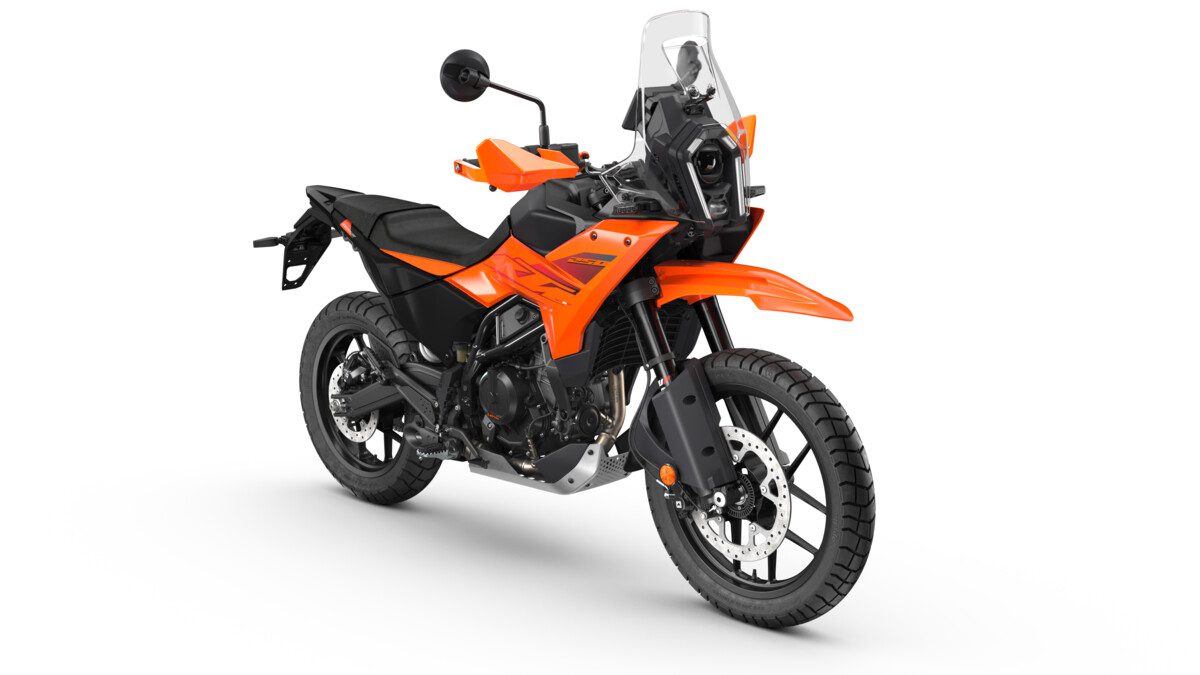
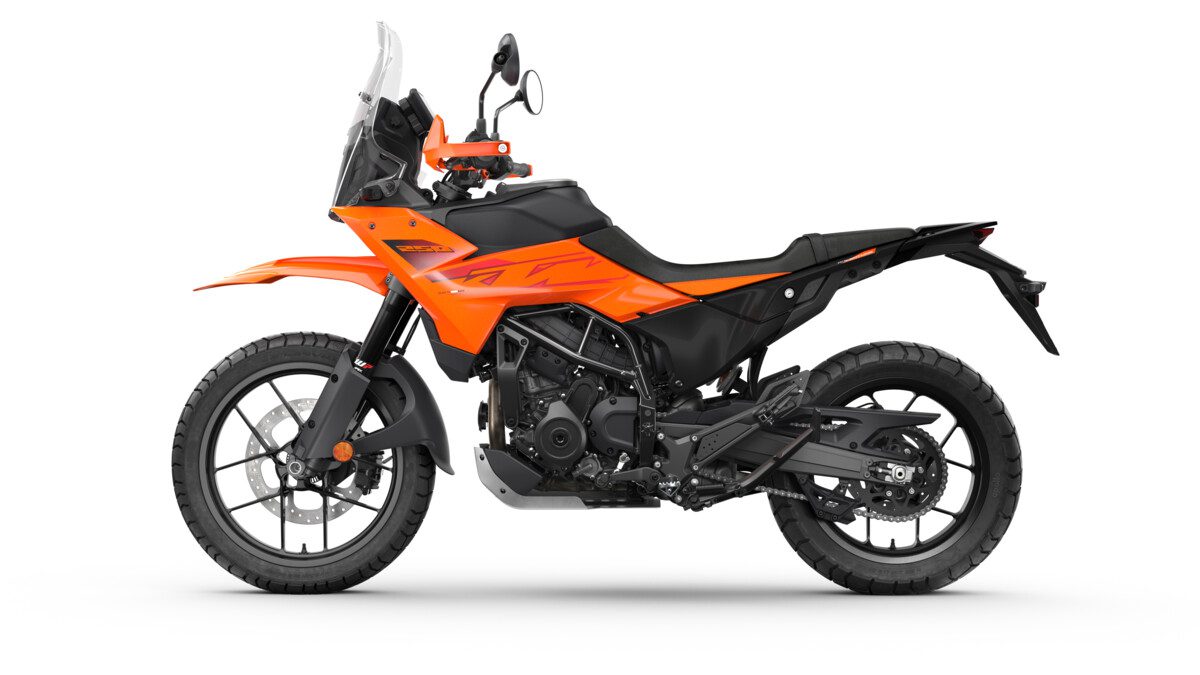
The KTM 250 Adventure is the lightweight, accessible entry into KTM’s adventure range — compact chassis, efficient 250cc single and a chassis tuned for fun, practical off-road capability in Indian conditions.
Jump to Full Specifications ↓First Impressions & Ride Summary
The KTM 250 Adventure is immediately approachable — light on its feet, eager in the mid-range and forgiving in slower technical sections. Its compact packaging makes it easy to place on-trail and urban manoeuvres are simple thanks to the bike’s low inertia and narrow ergonomics.
It’s a true do-it-all machine for riders who want credible off-road ability without sacrificing daily usability or fuel economy.
Design & Ergonomics
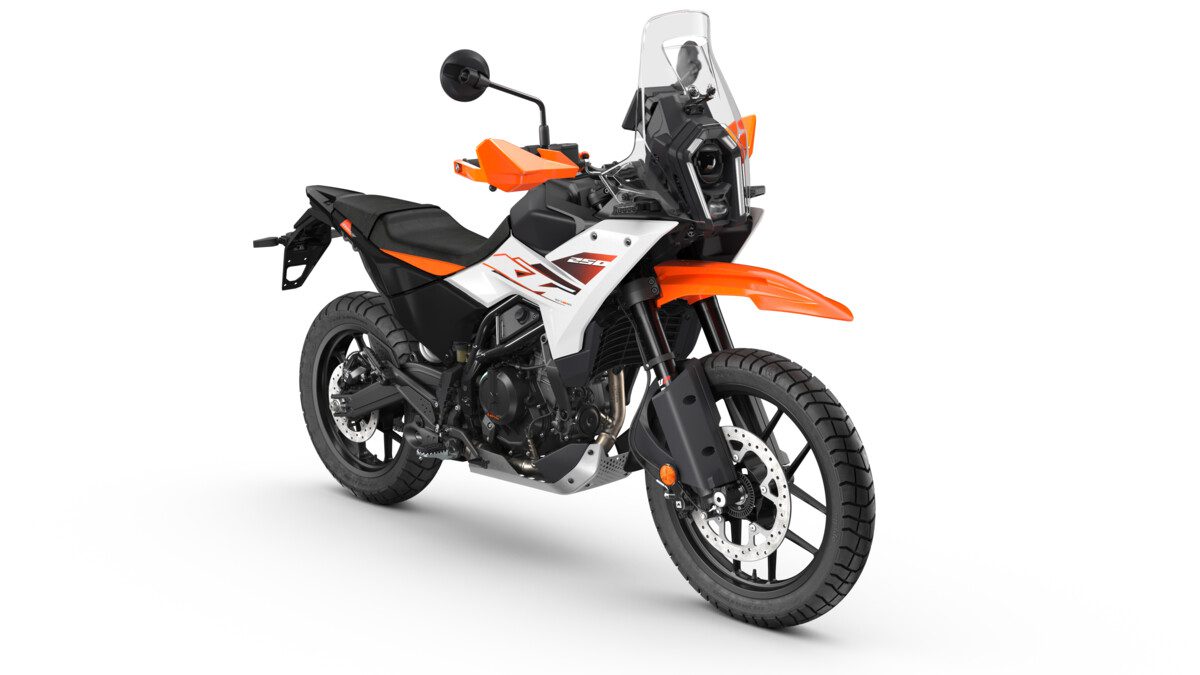
The 250 Adventure carries KTM’s familiar beak and slim tank profile, offering a tall, upright stance for great visibility and control. Panel fit and finish are excellent for the segment and the frame feels robust with mounting points for racks and accessories.
Riding position is neutral and comfortable for both seated and standing riding; the handlebars are well-placed and the pegs give good leverage for technical off-road work.
Compared with larger adventure bikes the 250’s compact footprint makes it far easier to manage off-road and around town.
Engine & Performance
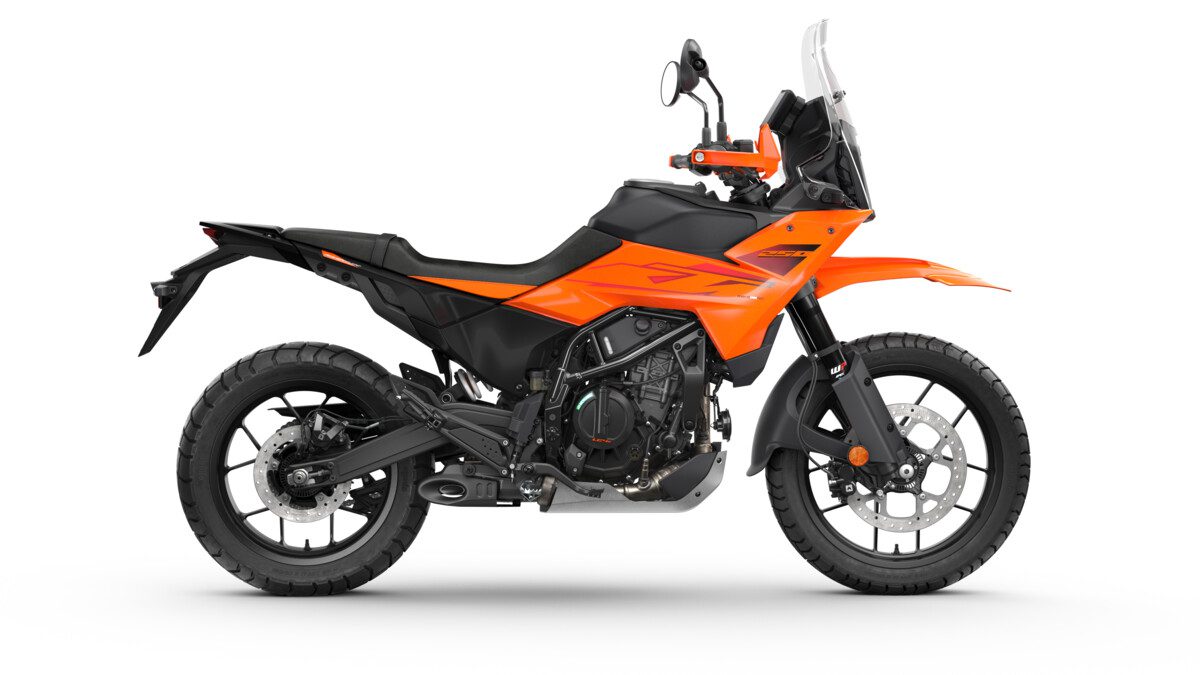
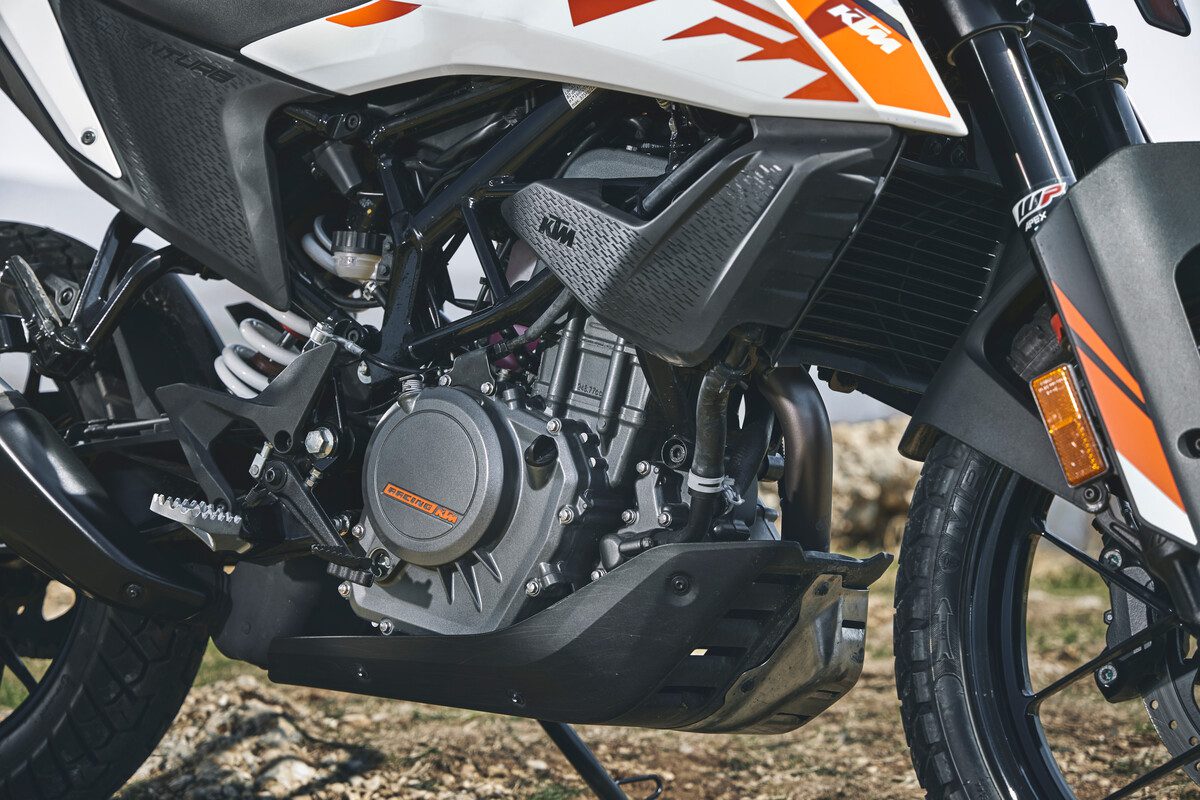
The 249.07 cc, 4-stroke single with SOHC and liquid-cooling produces 31 PS at 9,250 rpm and 25 Nm at 7,250 rpm. The motor’s 12.63:1 compression and Bosch EFI deliver crisp throttle response and strong mid-range acceleration — perfect for hillclimbs and quick overtakes.
The 6-speed gearbox with assist-and-slipper clutch and bi-directional quickshifter+ keeps shifts fast and tidy while the light clutch action helps in slow-speed technical sections.
Handling & Chassis
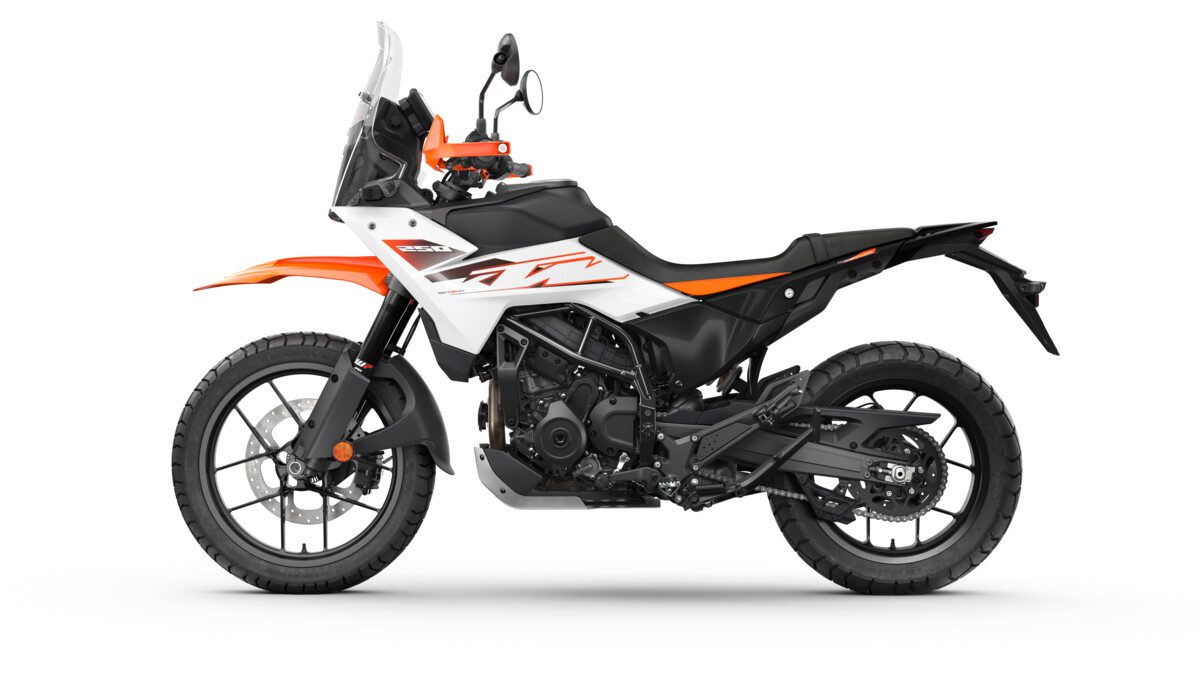
Split steel trellis frame with a powder-coated sub-frame gives the 250 Adventure a composed chassis balance. The WP APEX 43 mm USD forks (200 mm travel) and WP APEX monoshock (205 mm travel, 10-step preload) provide a wide setup window for both on-road comfort and off-road compliance.
Wheelbase of 1,464 mm and combined tyre sizes (19″ front / 17″ rear) create a confidence-inspiring platform that’s nimble on twisty roads and stable on highway stretches.
Braking
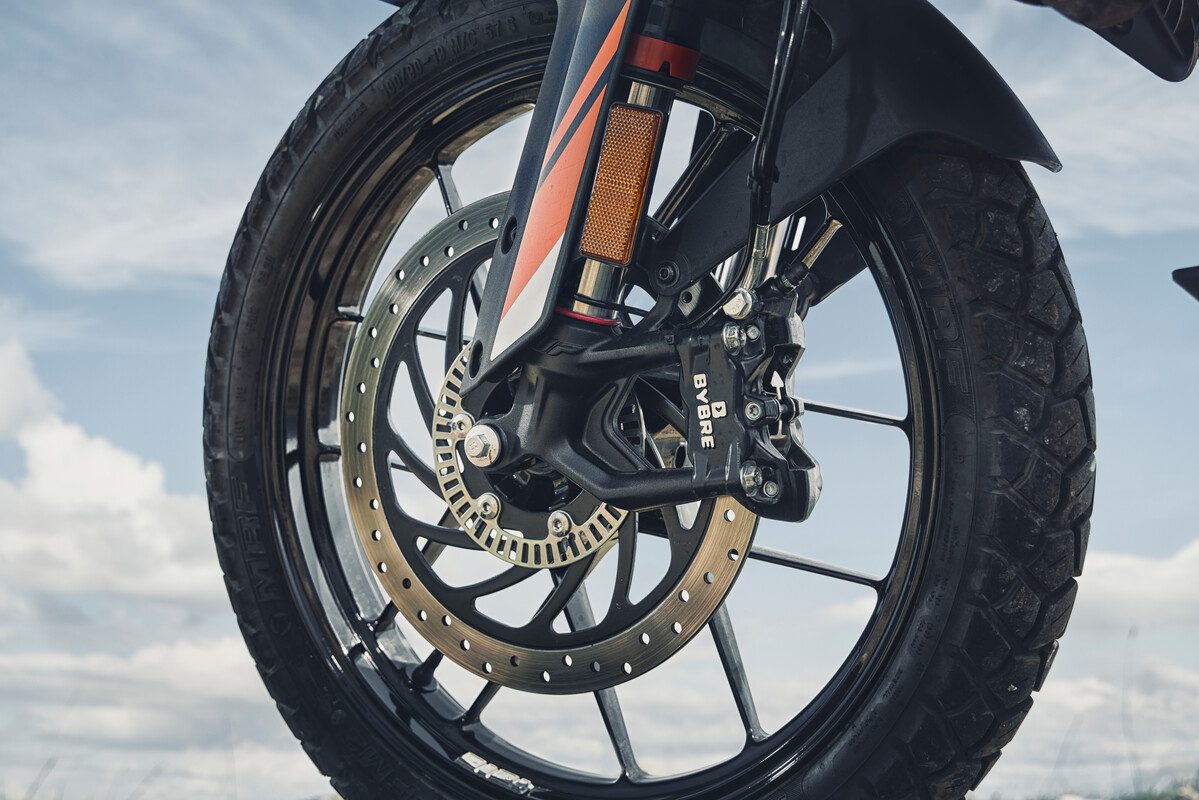
The 320 mm front disc with a 4-piston radially mounted caliper and a 240 mm rear disc deliver strong braking performance. Dual-channel ABS with an Offroad ABS mode allows confident braking on mixed surfaces while limiting intrusive intervention when off the beaten track.
Brake feel is progressive; many riders swap pads or fit braided lines for more bite and improved modulation under heavy use.
Touring & Comfort
The 14.5 L tank, comfortable seat and adjustable windshield make the 250 Adventure a competent commuter and weekend-touring machine. Claimed mileage of 31–38 kmpl translates to practical touring range with frequent refuel stops on long trips.
Ergonomics are tuned for long days in the saddle and the lighter kerb weight helps when handling luggage or navigating busy urban environments.
Owner Experience & Community Opinion
Owners like the 250 Adventure for its ease of use, low running costs and credible off-road capability. Common owner mods include crash protection, luggage racks and more aggressive tyres for extended trail use.
Common owner tweaks include crash bars, better luggage mounting and tyre swaps for longer trail life.
250 Adventure owners — share tyre choices, gear ratios and trail routes to help others get the most from this nimble platform. Leave your comment.
Pros & Cons
- Lightweight and easy to flick around
- Strong mid-range and usable powerband
- Good off-road capability for the class
- Low running costs and accessible price
- Less outright torque than larger 390 sibling on long highway stretches
- Electronics feature set is basic compared to premium adventure bikes
- Some riders may want more wind protection for extended touring
Full Specifications
Engine & Transmission
| Engine Type | 4-stroke, single-cylinder, SOHC, liquid-cooled |
|---|---|
| Displacement | 249.07 cc |
| Max Power | 31 PS @ 9,250 rpm |
| Max Torque | 25 Nm @ 7,250 rpm |
| Compression Ratio | 12.63:1 |
| Bore x Stroke | 72 mm x 61.1 mm |
| Fuel System | Bosch electronic fuel injection |
| Transmission | 6-speed manual (1 down, 5 up); Assist & slipper clutch; Bi-directional quickshifter+ |
| Starting | Kick and self-start |
Assist & slipper clutch and quickshifter+ make the 250 feel grown-up in traffic and on short highways alike.
Chassis, Suspension & Dimensions
| Frame | Split steel trellis frame with powder-coated sub-frame |
|---|---|
| Front Suspension | WP APEX USD 43 mm forks, 200 mm travel |
| Rear Suspension | WP APEX monoshock, 205 mm travel, 10-step adjustable preload |
| Wheelbase | 1,464 mm |
| Seat Height | 825 mm |
| Ground Clearance | 228 mm |
| Fuel Tank Capacity | 14.5 litres |
| Kerb Weight | 176 kg |
High ground clearance and long travel suspension are tuned to keep the bike confident off-road.
Brakes & Wheels
| Front Brake | 320 mm disc with 4-piston radially mounted caliper |
|---|---|
| Rear Brake | 240 mm disc with single-piston floating caliper |
| ABS | Dual-channel with Offroad ABS mode |
| Tyres | Front 19-inch / Rear 17-inch tubeless; Alloy wheels |
| Electronics | 5-inch TFT, Bluetooth, USB charging, Ride-by-wire, Quickshifter+, Navigation assist |
The electronics package covers essentials and keeps the platform light and cost-effective.
Performance & Mileage
| Claimed Mileage | 31–38 kmpl (practical city & touring) |
|---|---|
| Top Speed (claimed) | ~140 km/h |
Expect the higher end of mileage with calm touring; aggressive off-road use will reduce figures considerably.